MVP Stabilization / $2,000-7,000

Make your MVP stable enough for real users.

We strengthen the core of your MVP so real people can sign in, pay, use the product, and come back without the system falling apart.

$2,000-7,000   /   typically 2-6 weeks

Real users can enterPayments holdData stays cleanDeploys stop feeling riskyYour team can keep building

From fragile code to a product you can actually operate.

These are the kinds of product systems we put in place during MVP Stabilization. You do not need to read the code. You need to see that the product becomes safer, easier to release, and easier to monitor.

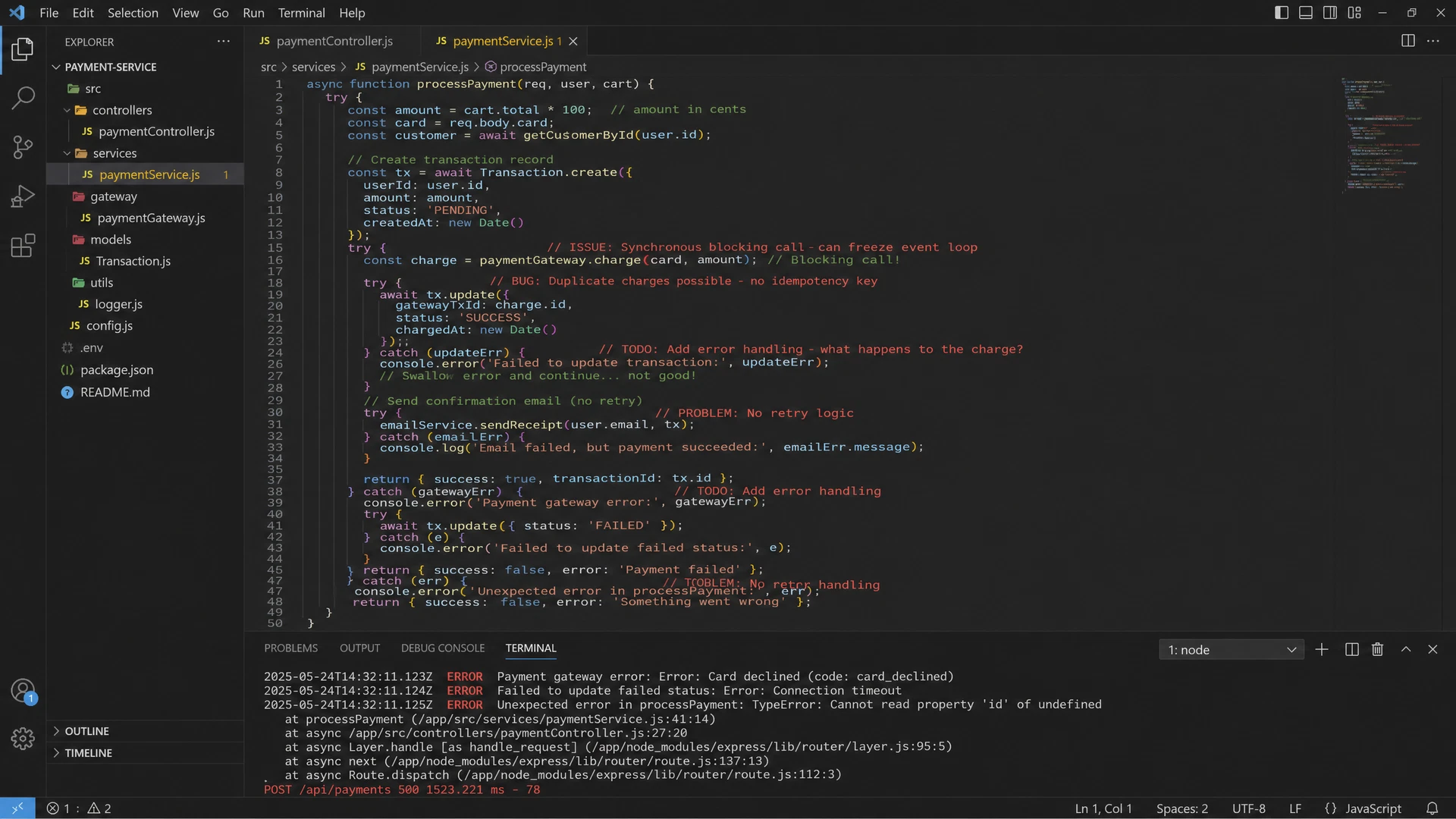
Fragile payment service code with errors and failed payment logs before stabilization
Step 01 / Find the risk

We find the parts that can break users, payments, or launch.

Before fixing, we inspect the real product: code, errors, payment flows, retries, APIs, and failure states. This turns vague fear into a clear list of what must be repaired first.

  • Broken flows become visible.
  • Payment and user risks get prioritized.
  • You stop guessing where the product is fragile.
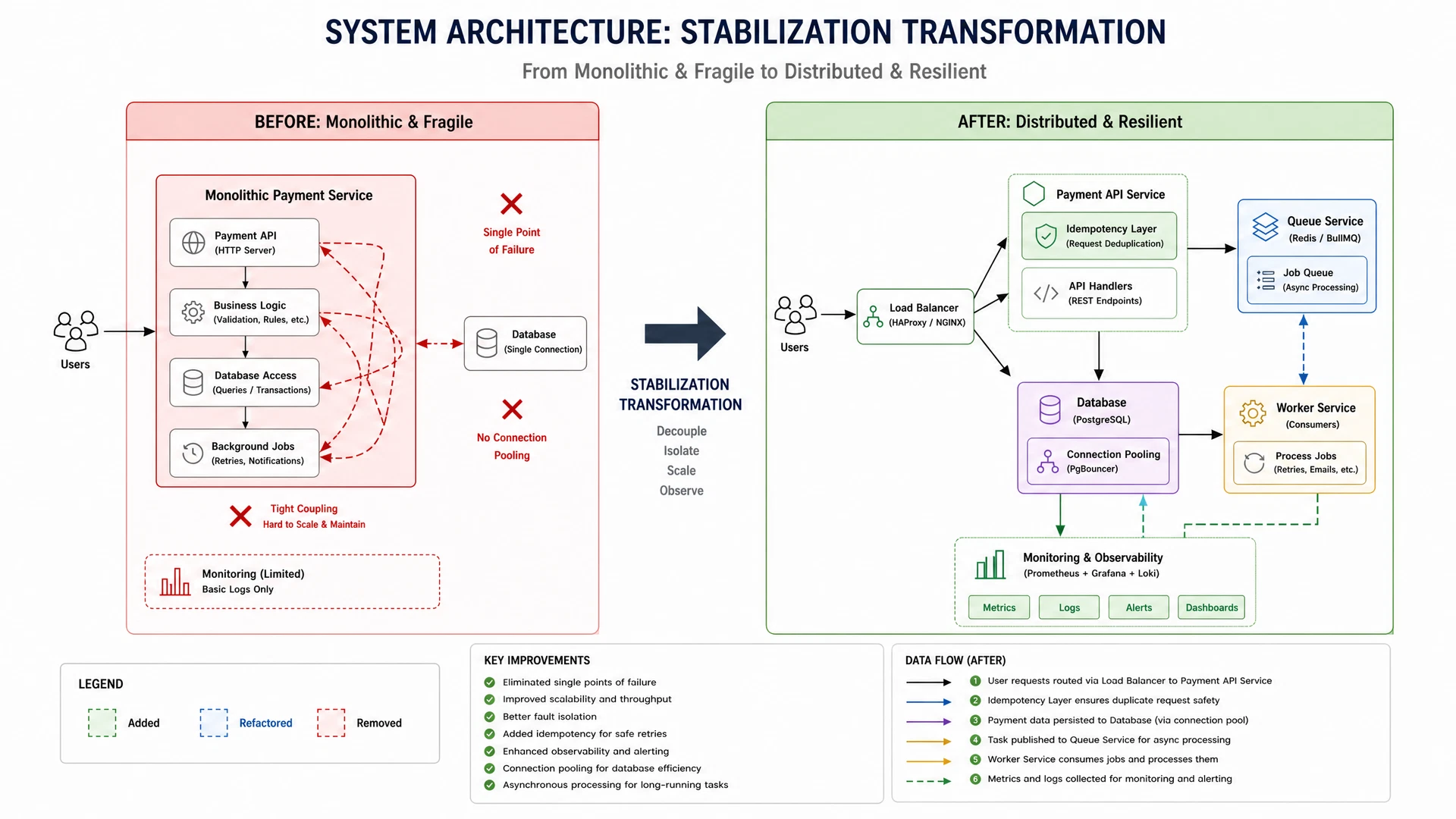
System architecture transformation from fragile monolith to resilient distributed architecture
Step 02 / Stabilize architecture

We separate the product into parts that can survive real use.

Instead of one fragile block, the system gets cleaner boundaries: API, database, jobs, queues, monitoring, and recovery paths. The product becomes easier to understand and safer to change.

  • Fewer single points of failure.
  • Cleaner data and backend responsibility.
  • A technical map your team can keep using.
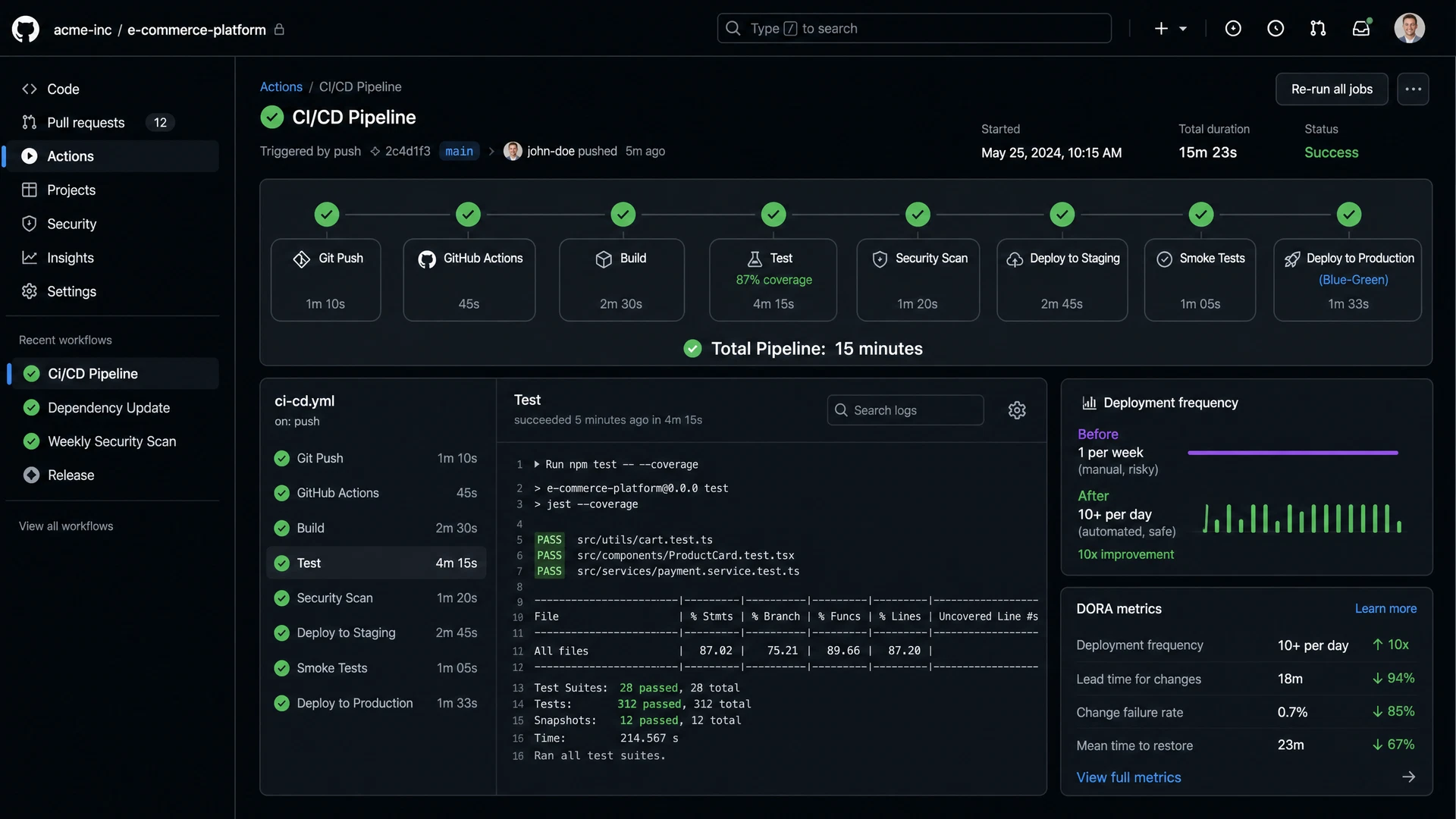
Successful CI/CD pipeline with automated build, tests, security scan, staging and production deploy
Step 03 / Make releases safer

We turn deployment from a risky manual moment into a repeatable path.

Tests, build steps, security checks, staging, smoke tests, and production release steps become visible. You can ship fixes without every update feeling like a gamble.

  • Every important change gets checked.
  • Deployments become repeatable.
  • Your team knows what passed before release.
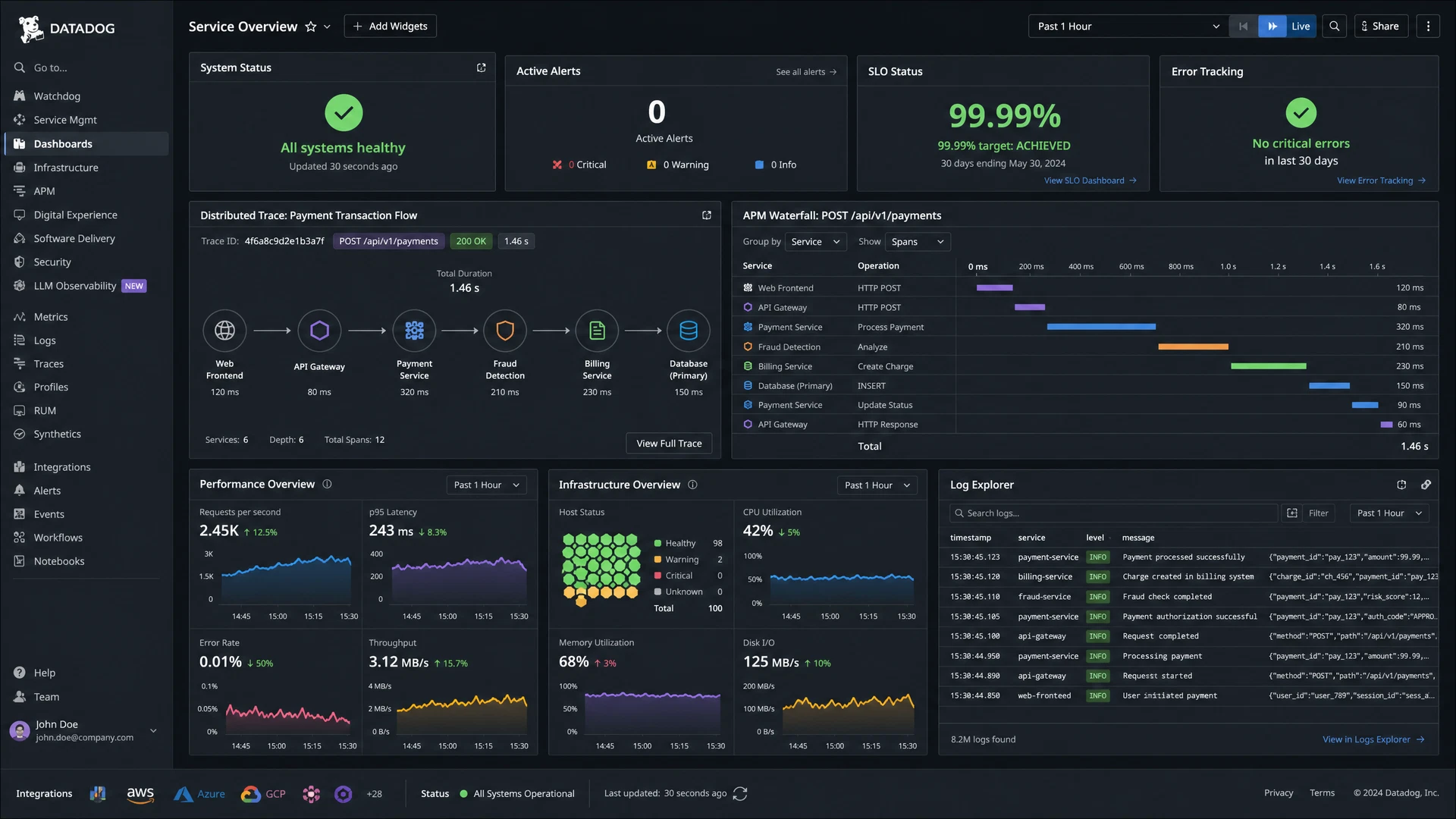
Monitoring dashboard showing system health, alerts, uptime, traces, infrastructure and logs
Step 04 / Add visibility

We make the product observable, so problems do not stay hidden.

Monitoring shows system health, alerts, traces, logs, latency, and infrastructure behavior. When something breaks, you can see where it happened instead of waiting for customers to complain.

  • Errors and slow requests become visible.
  • Alerts warn you before damage grows.
  • Support and engineering can react faster.
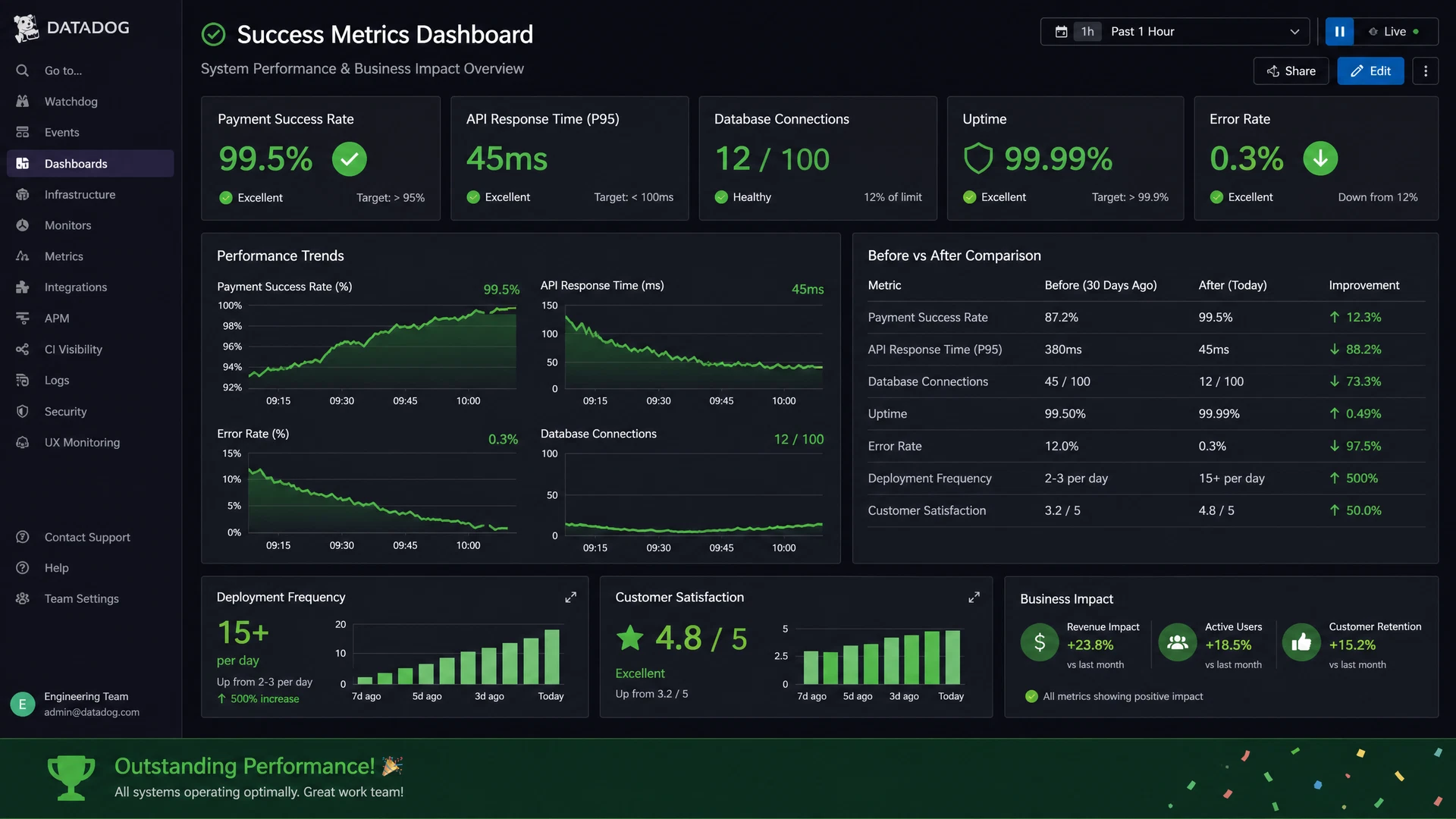
Success metrics dashboard showing payment success, API response time, uptime, error rate and business impact
Step 05 / Measure the result

You can see whether the product is becoming stronger.

The goal is not just cleaner code. The goal is a product that handles users, payments, uptime, errors, deployments, and customer experience with more confidence.

  • Payment success and uptime are trackable.
  • Error rates and response times are visible.
  • You can explain progress to investors, clients, or your team.

Your MVP works in a demo. Now it needs to survive real use.

This is the package for founders who already have a product people can see, but do not trust it enough for customers, pilots, or investors.

We do not rebuild everything. We make the product core stronger: the parts that users touch, the parts that move money, and the parts your team must support after launch.

The demo works, but real users create edge cases. Signups, permissions, or payments feel fragile. APIs and integrations break too easily. The database is messy or hard to trust. Deployment feels risky every time. You need the product to feel calm under load.

Five simple moves. One stronger product core.

01Find what can break launch

We identify the flows that can stop users, block payments, or make the product look unreliable.

02Fix the product core

Backend, frontend, database, APIs, auth, permissions, and payments get stabilized around the real journey.

03Clean the unstable parts

Duplicated logic, brittle code, broken integrations, and messy architecture are removed where they matter.

04Prepare for production

Deployment, monitoring, infrastructure, security basics, and backups become less fragile.

05Validate critical flows

We test the product paths users will actually touch before you put more traffic on them.

Simple goal: your product should not feel like a prototype when real users arrive.

What becomes stronger.

Backend

APIs, jobs, webhooks, and server logic become more dependable.

Frontend

Critical screens and user paths are cleaned up for real usage.

Database

Data structure, queries, migrations, and backups get safer.

Auth and permissions

Login, access, roles, sessions, and user security basics are repaired.

Payments

Payment flows, failure states, and revenue logic become less risky.

Deployment

Release steps become clearer, repeatable, and easier to hand off.

Monitoring

You get basic visibility into errors and production behavior.

Documentation

Your team gets notes, decisions, and an updated product map.

Your product is no longer just a demo.

It becomes reliable enough to support real customers, accept more usage, and give your team a foundation they can keep building on.

What changes

More users should feel like growth, not panic. The product core becomes cleaner, calmer, and easier to operate after launch.

Do not wait for users to find the weak points first.

Bring the repository, staging link, prototype, or existing product. We will help you decide whether MVP Stabilization is the right path and what it should include.

Book Stabilization Call